- dotrising.com
- Compare
- Mate 80 Pro Max Wind vs Galaxy S26 Ultra
Huawei Mate 80 Pro Max Wind vs Samsung Galaxy S26 Ultra
What Mate 80 Pro Max Wind does better (8) and where Galaxy S26 Ultra wins (15) — every spec side by side.
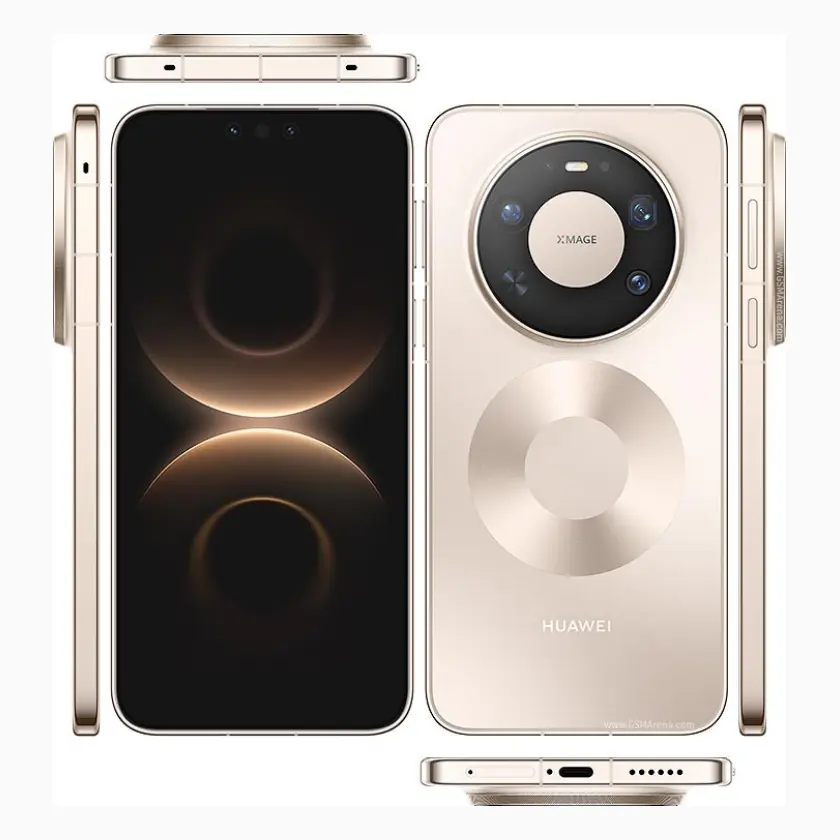
vs
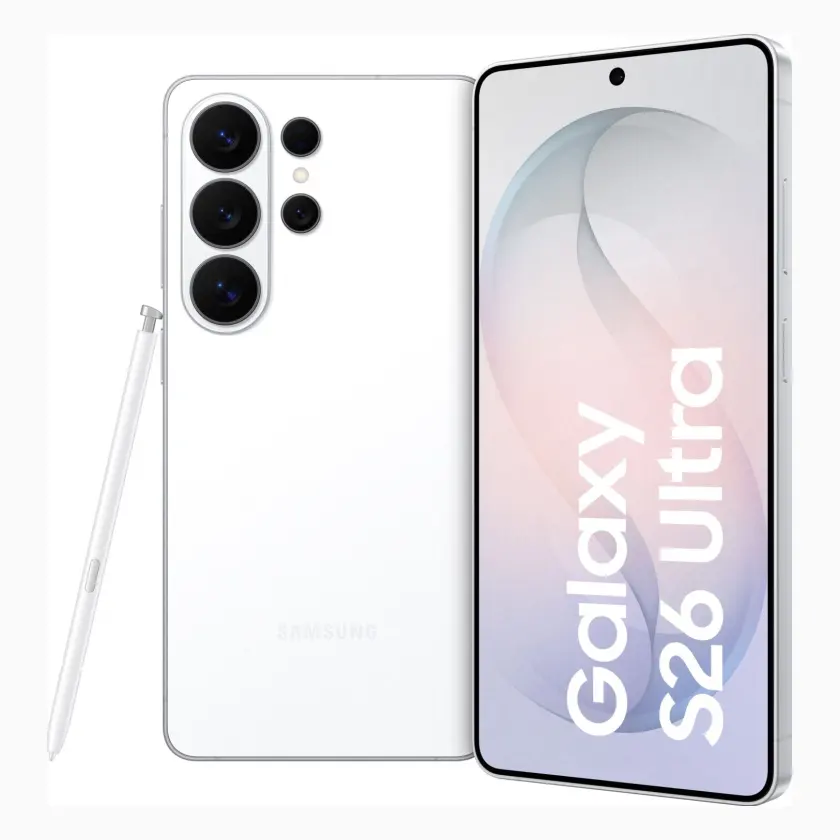
9.4Display9.1
8.4Performance9.4
9.5Camera9.8
9.6Battery8.0
9.3Features9.7
Dimensions
Size comparison
Mate 80 Pro Max WindGalaxy S26 Ultra
| Mate 80 Pro Max Wind | Galaxy S26 Ultra | Difference | |
|---|---|---|---|
| Height | 164.4 mm | 163.6 mm | +0.8 mm |
| Width | 79 mm | 78.1 mm | +0.9 mm |
| Thickness | 8.3 mm | 7.9 mm | +0.4 mm |
| Weight | 239 g | 214 g | +25 g |
Drawn to the same scale from the official dimensions (front and side).
Why is Mate 80 Pro Max Wind better than Galaxy S26 Ultra?
- Peak brightness8,000 nits vs 2,600 nits3.1×
- Wired charging100 W vs 60 W+67%
- Battery capacity6,000 mAh vs 5,000 mAh+20%
- Wireless charging power80 W vs 25 W3.2×
- Storage (base)512 GB vs 256 GB2×
- CPU cores9 vs 8+12%
- Charged in 30 min83% vs 75%+11%
- Selfie camera13 MP vs 12 MP+8%
Why is Galaxy S26 Ultra better than Mate 80 Pro Max Wind?
- Main camera50 MP vs 200 MP4×
- Geekbench 6 (multi-core)5,772 vs 11,5662×
- AnTuTu score2,116,240 vs 2,627,986+24%
- CPU frequency2.75 GHz vs 4.74 GHz+72%
- Optical zoom4× vs 5×+25%
- Process6 nm vs 3 nm2×
- Max video4K vs 8K
- 4K video frame rate60 fps vs 120 fps2×
- eSIMNo · Mate 80 Pro Max Wind: Yes
- Weight239 g vs 214 g+12%
- Pixel density455 ppi vs 500 ppi+10%
- Rear cameras3 vs 4+33%
Specifications
Side by side
| Design | ||
| Weight | 239 g | 214 g |
| Thickness | 8.3 mm | 7.9 mm |
| Height | 164.4 mm | 163.6 mm |
| Width | 79 mm | 78.1 mm |
| Frame | Aluminium | Aluminium |
| Back | Aluminium | Glass |
| Ingress protection | IP68 | IP68 |
| Water resistance (IPx) | IPx8 | IPx8 |
| Glass protection | Huawei Kunlun Glass 2 | Corning Gorilla Armor 2 |
| Colours | Black, Gold | Cobalt Violet, Sky Blue, Black, White, Silver Shadow, Pink Gold |
| Stylus | — | Yes |
| Display | ||
| Screen size | 6.9″ | 6.9″ |
| Panel | LTPO OLED | Dynamic LTPO AMOLED 2X |
| OLED panel | Yes | Yes |
| LTPO (adaptive 1–120 Hz) | Yes | Yes |
| Resolution (width) | 1,320 px | 1,440 px |
| Resolution (height) | 2,848 px | 3,120 px |
| Pixel density | 455 ppi | 500 ppi |
| Refresh rate | 120 Hz | 120 Hz |
| Peak brightness | 8,000 nits | 2,600 nits |
| Measured brightness | — | 1,480 nits |
| Screen-to-body ratio | 90.2% | 90.7% |
| HDR | Yes | Yes |
| Performance | ||
| Chipset | Kirin 9030 Pro | Qualcomm SM8850-1-AD Snapdragon 8 Elite Gen 5 |
| Chip maker | Kirin | Qualcomm |
| Process | 6 nm | 3 nm |
| CPU cores | 9 | 8 |
| CPU frequency | 2.75 GHz | 4.74 GHz |
| GPU | Maleoon 935 | Adreno 840 |
| AnTuTu score | 2,116,240 | 2,627,986 |
| Geekbench 6 (multi-core) | 5,772 | 11,566 |
| 3DMark Wild Life Extreme | — | 7,744 |
| Memory | ||
| RAM | 16 GB | 16 GB |
| Storage (max) | 1,024 GB | 1,024 GB |
| Storage (base) | 512 GB | 256 GB |
| Storage type | — | UFS 4. |
| Memory card slot | No | No |
| Camera | ||
| Main camera | 50 MP | 200 MP |
| Main camera aperture | f/1.4 | f/1.4 |
| Main sensor size | — | 1/1.3" |
| Rear cameras | 3 | 4 |
| Optical stabilisation | Yes | Yes |
| Ultra-wide camera | Yes | Yes |
| Telephoto camera | Yes | Yes |
| Optical zoom | 4× | 5× |
| Max video | 4K | 8K |
| 4K video frame rate | 60 fps | 120 fps |
| Selfie camera | 13 MP | 12 MP |
| 4K selfie video | Yes | Yes |
| Battery | ||
| Battery capacity | 6,000 mAh | 5,000 mAh |
| Battery type | Si/C | Li-Ion |
| Active use (test) | — | 16.4 h |
| Wired charging | 100 W | 60 W |
| Charged in 30 min | 83% | 75% |
| Wireless charging | Yes | Yes |
| Wireless charging power | 80 W | 25 W |
| Reverse wireless charging | Yes | Yes |
| Connectivity | ||
| 5G | Yes | Yes |
| eSIM | No | Yes |
| Dual SIM | Yes | Yes |
| Wi-Fi standard | Wi-Fi 7 | Wi-Fi 7 |
| Bluetooth | 6 | 6 |
| NFC | Yes | Yes |
| USB | USB Type-C 3.1 | USB Type-C 3.2 |
| USB version | 3.1 | 3.2 |
| Video output | Yes | Yes |
| Ultra Wideband | — | Yes |
| Satellite messaging | Yes | — |
| Infrared port | Yes | — |
| Dual-band GPS | Yes | — |
| Satellite navigation | GLONASS, GALILEO, BDS, QZSS, NavIC | GLONASS, GALILEO, BDS, QZSS |
| Features | ||
| Stereo speakers | Yes | Yes |
| 3.5 mm headphone jack | No | No |
| Loudspeaker loudness | — | -25.9 LUFS |
| Fingerprint sensor | Yes | Under display, ultrasonic |
| 3D face unlock | Yes | — |
| Barometer | Yes | Yes |
| Sensors | Face ID, fingerprint (side-mounted), accelerometer, gyro, proximity, barometer, compass | Fingerprint (under display, ultrasonic), accelerometer, gyro, proximity, compass, barometer |
| SAR (head) | — | 1.28 W/kg |
| Software | ||
| OS at launch | HarmonyOS 6.0 | Android 16 |
| Platform | HarmonyOS | Android |
| Interface | — | One UI 9 |
| Major OS updates promised | — | 7 |
| EU label | ||
| Energy class | — | A |
| Battery charge cycles | — | 1,200 |
| Endurance per cycle | — | 55 h |
| Repairability class | — | C |
| Drop resistance class | — | A |
Related comparisons
 vs
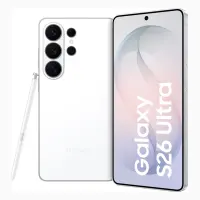 Samsung Galaxy S25 UltravsSamsung Galaxy S26 Ultra
9.59.6
vs
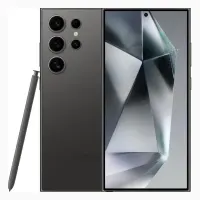 Samsung Galaxy S26 UltravsSamsung Galaxy S24 Ultra
9.69.3
vs
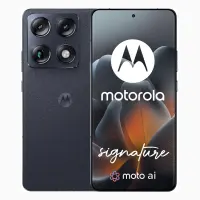 Samsung Galaxy S26 UltravsMotorola Signature
9.69.6
vs
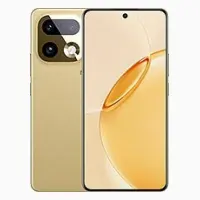 Samsung Galaxy S26 UltravsRealme 16 Pro+
9.69.6
vs
 Samsung Galaxy S26 UltravsOnePlus Nord 6
9.69.5
vs
 Samsung Galaxy S26 UltravsOnePlus 15T
9.69.7