- dotrising.com
- Compare
- Mate 70 RS Ultimate vs Mate 80 RS Ultimate
Huawei Mate 70 RS Ultimate vs Huawei Mate 80 RS Ultimate
What Mate 70 RS Ultimate does better (0) and where Mate 80 RS Ultimate wins (9) — every spec side by side.
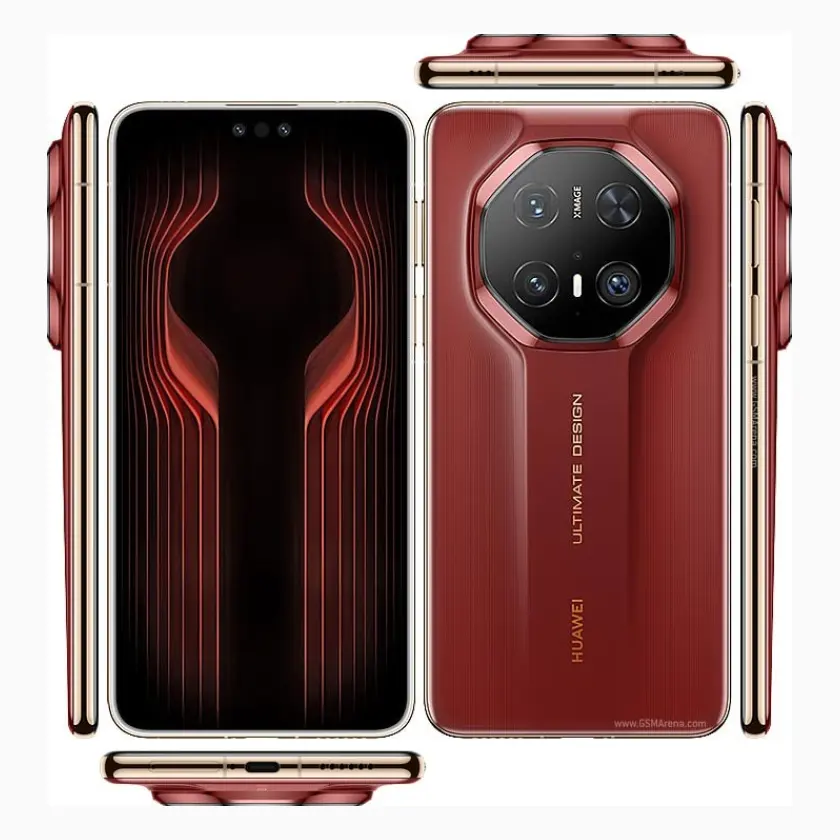
vs
9.5Display9.4
9.4Camera9.6
9.6Battery9.6
8.8Features9.5
Dimensions
Size comparison
Mate 70 RS UltimateMate 80 RS Ultimate
| Mate 70 RS Ultimate | Mate 80 RS Ultimate | Difference | |
|---|---|---|---|
| Height | 164.6 mm | 164.4 mm | +0.2 mm |
| Width | 79.5 mm | 79 mm | +0.5 mm |
| Thickness | 8.3 mm | 8.3 mm | = |
| Weight | 251 g | 249 g | +2 g |
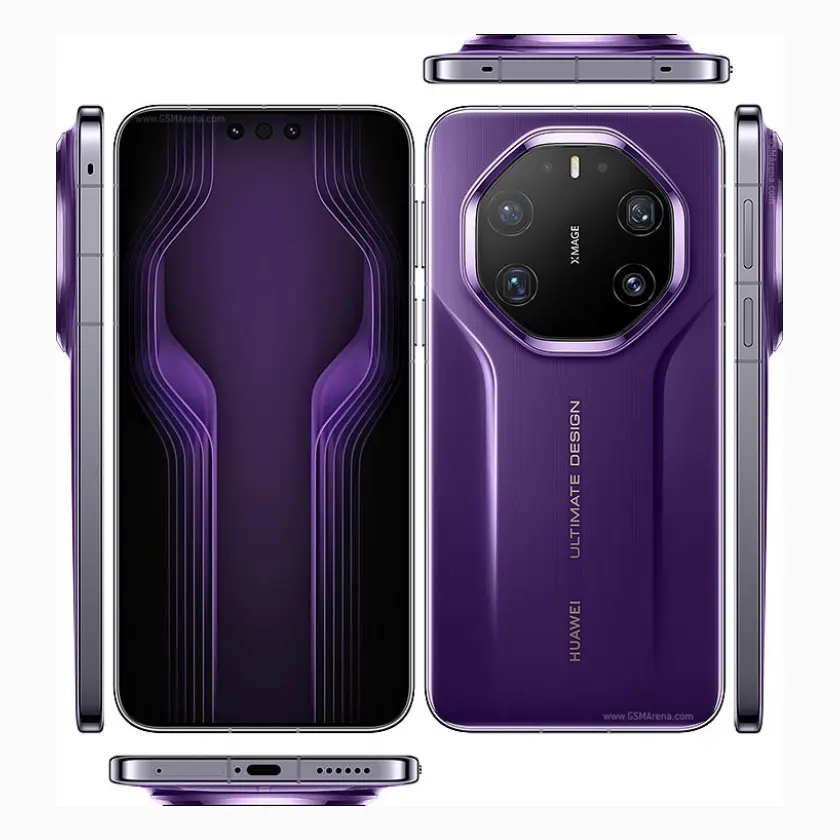
Drawn to the same scale from the official dimensions (front and side).
Why is Mate 70 RS Ultimate better than Mate 80 RS Ultimate?
Mate 70 RS Ultimate has no measurable advantages in this pair.
Why is Mate 80 RS Ultimate better than Mate 70 RS Ultimate?
- Peak brightness3,500 nits vs 8,000 nits2.3×
- Optical zoom3.5× vs 6.2×+77%
- Battery capacity5,700 mAh vs 6,000 mAh+5%
- RAM16 GB vs 20 GB+25%
- eSIMNo · Mate 70 RS Ultimate: Yes
- CPU frequency2.5 GHz vs 2.75 GHz+10%
- Rear cameras3 vs 4+33%
- Process7 nm vs 6 nm+17%
- Bluetooth5.2 vs 6+15%
Specifications
Side by side
| Design | ||
| Weight | 251 g | 249 g |
| Thickness | 8.3 mm | 8.3 mm |
| Height | 164.6 mm | 164.4 mm |
| Width | 79.5 mm | 79 mm |
| Ingress protection | IP68 | IP68 |
| Water resistance (IPx) | IPx8 | IPx8 |
| Glass protection | Huawei Kunlun Glass (basalt tempered) | Huawei Kunlun Glass 3 (basalt tempered) |
| Colours | Black, White, Red | Black, White, Violet |
| Display | ||
| Screen size | 6.9″ | 6.9″ |
| Panel | Dual-layer LTPO OLED | Dual-layer LTPO OLED |
| OLED panel | Yes | Yes |
| LTPO (adaptive 1–120 Hz) | Yes | Yes |
| Resolution (width) | 1,316 px | 1,320 px |
| Resolution (height) | 2,832 px | 2,848 px |
| Pixel density | 453 ppi | 455 ppi |
| Refresh rate | 120 Hz | 120 Hz |
| Peak brightness | 3,500 nits | 8,000 nits |
| Screen-to-body ratio | 89.7% | 90.2% |
| HDR | — | Yes |
| Performance | ||
| Chipset | Kirin 9020 | Kirin 9030 Pro |
| Chip maker | Kirin | Kirin |
| Process | 7 nm | 6 nm |
| CPU cores | 8 | — |
| CPU frequency | 2.5 GHz | 2.75 GHz |
| GPU | Maleoon 920 | Maleoon 935 |
| Memory | ||
| RAM | 16 GB | 20 GB |
| Storage (max) | 1,024 GB | 1,024 GB |
| Storage (base) | 512 GB | 512 GB |
| Memory card slot | No | No |
| Camera | ||
| Main camera | 50 MP | 50 MP |
| Main camera aperture | f/1.4 | f/1.4 |
| Rear cameras | 3 | 4 |
| Optical stabilisation | Yes | Yes |
| Ultra-wide camera | Yes | Yes |
| Telephoto camera | Yes | Yes |
| Optical zoom | 3.5× | 6.2× |
| Max video | 4K | 4K |
| Selfie camera | 13 MP | 13 MP |
| 4K selfie video | Yes | Yes |
| Battery | ||
| Battery capacity | 5,700 mAh | 6,000 mAh |
| Battery type | Si/C | — |
| Wired charging | 100 W | 100 W |
| Wireless charging | Yes | Yes |
| Wireless charging power | 80 W | 80 W |
| Reverse wireless charging | Yes | Yes |
| Connectivity | ||
| 5G | Yes | Yes |
| eSIM | No | Yes |
| Dual SIM | Yes | Yes |
| Wi-Fi standard | Wi-Fi 7 | Wi-Fi 7 |
| Bluetooth | 5.2 | 6 |
| NFC | Yes | Yes |
| USB | USB Type-C 3.1 | USB Type-C 3.1 |
| USB version | 3.1 | 3.1 |
| Video output | Yes | Yes |
| Ultra Wideband | Yes | Yes |
| Satellite messaging | Yes | Yes |
| Dual-band GPS | Yes | Yes |
| Satellite navigation | GLONASS, GALILEO, BDS, QZSS, NavIC | GLONASS, GALILEO, BDS, QZSS, NavIC |
| Features | ||
| Stereo speakers | Yes | Yes |
| 3.5 mm headphone jack | No | No |
| 3D face unlock | Yes | Yes |
| Barometer | Yes | Yes |
| Sensors | Face ID, fingerprint (side-mounted), accelerometer, gyro, proximity, barometer, compass | Face ID, fingerprint (side-mounted), accelerometer, gyro, proximity, barometer, compass |
| Software | ||
| OS at launch | HarmonyOS 4.3 | HarmonyOS 6.0 |
| Platform | HarmonyOS | HarmonyOS |